
Black Eyed Peas and Ham For New Year’s Day
Down here in the South, there’s something mighty comforting about starting the year with a pot of black-eyed peas simmering away on the stove. My family has done this for as long as I can remember, and waking up on New Year’s Day to that savory smell drifting through the house just feels like a fresh start wrapped up in warm tradition. The peas stand for good luck, the pork brings prosperity, and the whole pot promises a belly full of comfort to kick off the year right!
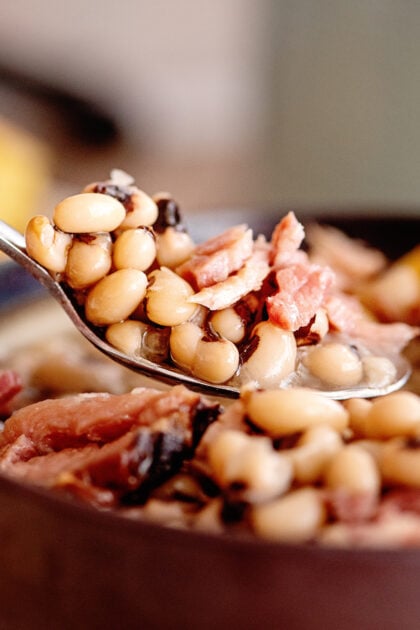
A Quick Look At The Recipe
- Recipe Name: Black Eyed Peas and Ham
- Main Ingredients: dried black eyed peas, pork for seasoning: ham hocks, ham bone, or large piece of ham, salt, pepper, cooking oil, granulated sugar
- Why You'll Love It: Black-Eyed Peas and Ham simmer low and slow with smoky seasoning meat, simple spices, and tender peas that cook to buttery perfection. This classic Southern dish is traditionally served on New Year’s Day for good luck and makes a warm, comforting meal any time of year.
This version of black-eyed peas and ham cooks low and slow with tender peas, smoky seasoning meat, and simple pantry spices that work their magic as the hours go by. It’s a cozy, soul-settling dish that tastes like home and keeps everyone coming back for “just a little more,” even after the bowls are already scraped clean.
Want more black-eyed peas recipes to make this New Year’s Day? Check out my Black Eyed Peas & Vegetarian Hoppin John and Crock Pot Black Eyed Peas With Smoked Turkey Leg!
Before You Get Started
- Storing the beans: Store your dried peas in large mason jars rather than the bags they come in. This keeps little critters out of your peas!
- Soak overnight or use the quick-soak method: Dried peas need plenty of time to hydrate so they cook evenly and get that buttery-soft texture. If you’re short on time, use the quick-soak method by boiling the peas for 2 minutes, then letting them sit for 1 hour before cooking.
- Sort the peas: Spread them out and remove any stones or debris before soaking.
- Choose your seasoning meat: Ham hocks, a ham bone, or leftover ham all work beautifully.
- Keep them covered with water: These peas simmer for several hours, so make sure there’s always enough liquid to prevent sticking.
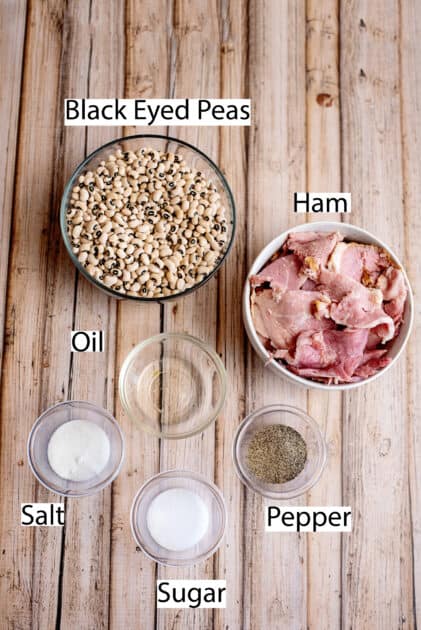
Recipe Ingredients
- Dry black eyed peas
- Pork of your choice (country pieces of ham, ham hock, or a ham bone).
- Salt and black pepper
- Oil
- Granulated sugar
How to Make Black-Eyed Peas and Ham
1. Soak the Peas
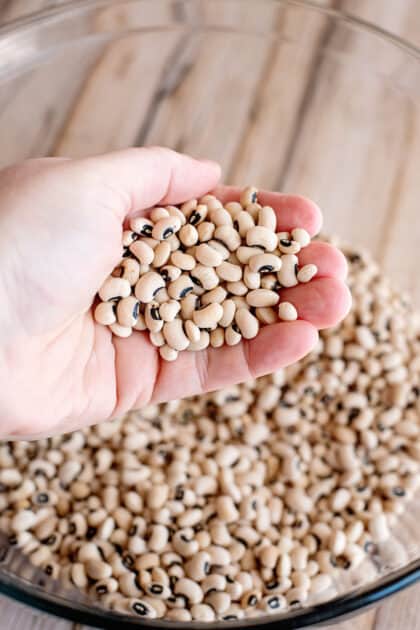
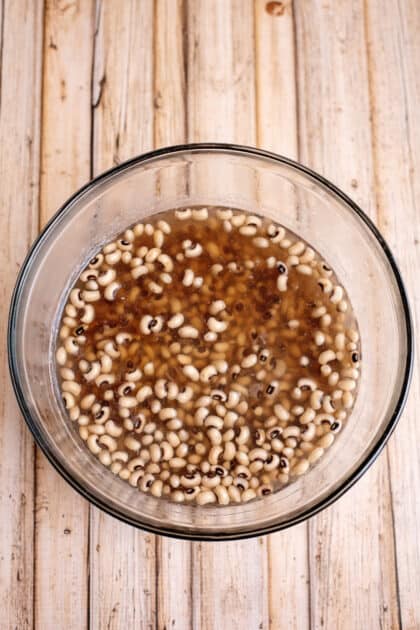
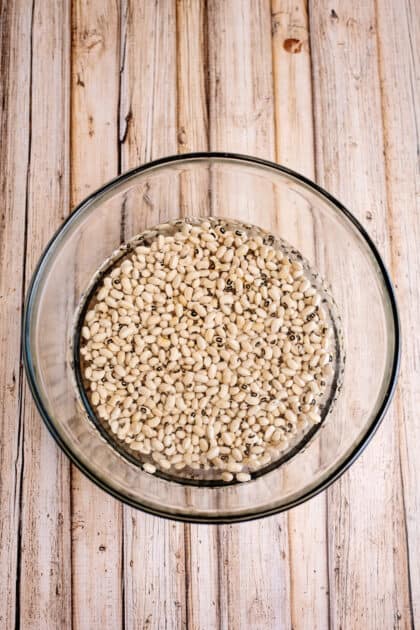
Sort through the dried peas to remove any stones. Place them in a large bowl, cover with water (a few inches above the peas), and soak overnight.
2. Drain and Transfer
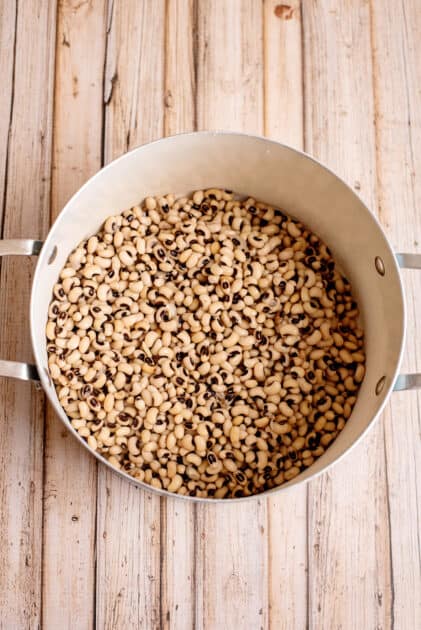
In the morning, pour off the soaking water and place the peas into the pot you’ll be cooking them in.
3. Add the Pork and Seasonings
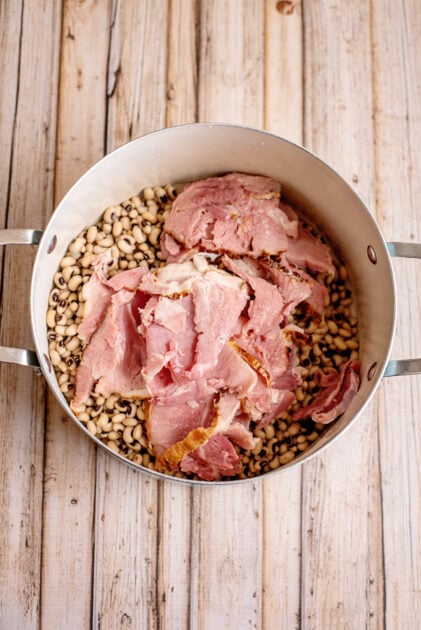
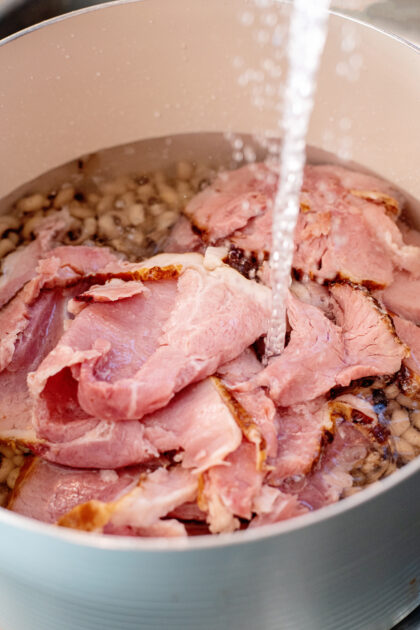
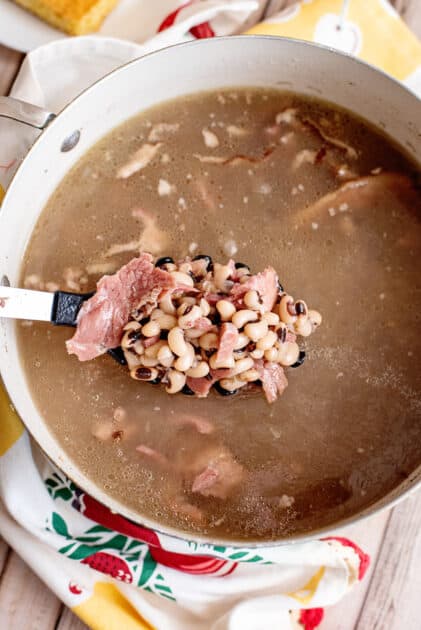
Add your ham hock, ham bone, or ham. Cover with water and add the salt, pepper, oil, and sugar. Bring everything to a boil, then reduce the heat to a gentle simmer.
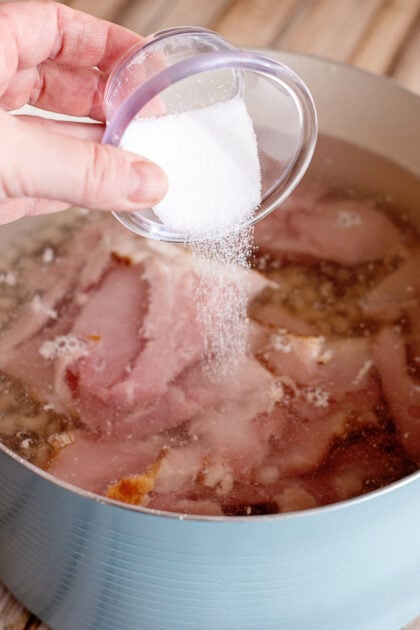
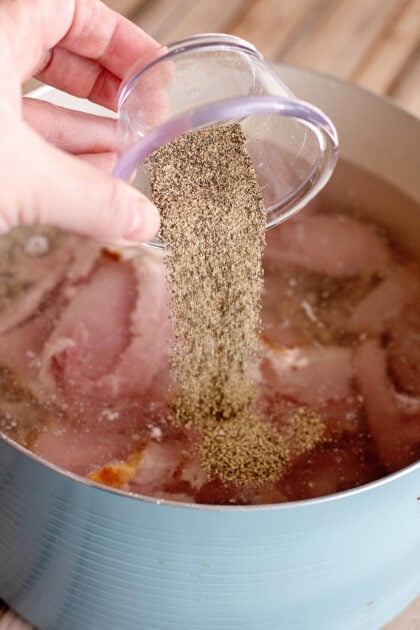
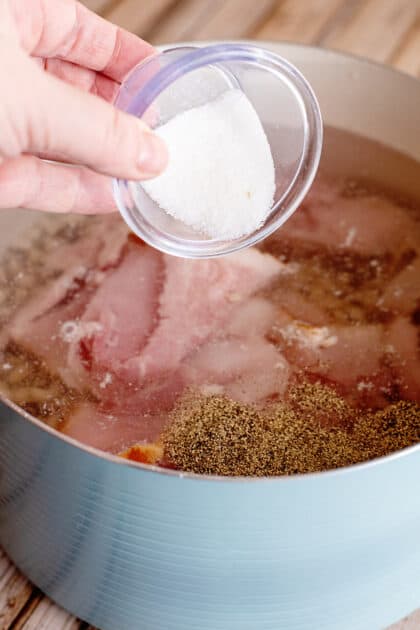
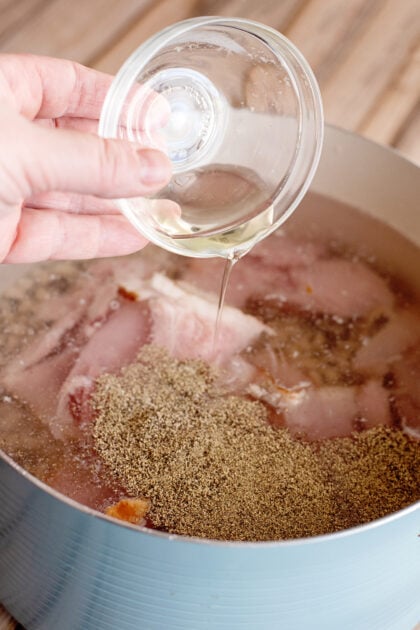
4. Cook Low and Slow
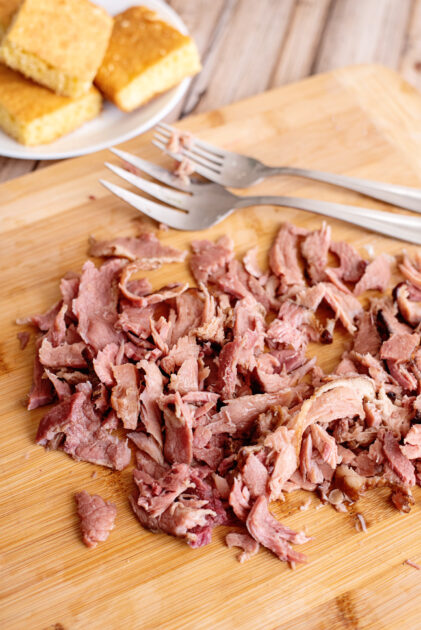
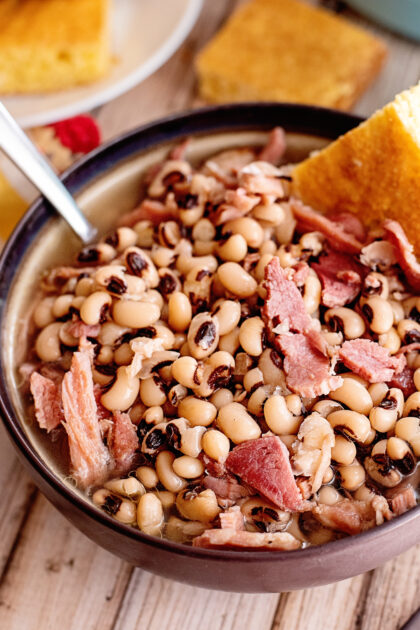
Simmer uncovered for several hours. Remove the ham, shred it, return it to the pot, and continue cooking until the peas are tender. Total cooking time is typically three to four hours.

Storage
- Refrigerator: Store leftovers in an airtight container for up to 4 days.
- Freezer: Freeze cooled peas in a freezer-safe container for up to 3 months. Thaw in the fridge overnight before reheating.
- Reheating: Reheat on the stovetop or microwave.
Variations & Recipe Notes
- Add aromatics: A chopped onion or a couple of garlic cloves can deepen the flavor.
- Spice it up: A pinch of crushed red pepper or cayenne pepper adds gentle heat.
- Make it richer: Swap part of the water for chicken broth.
- Add seasoning: Add a teaspoon of ground cumin or Creole seasoning.
- Vegetarian twist: Use smoked paprika instead of pork and cook with vegetable broth.
- Thicker peas: Mash a small scoop of peas in the pot near the end of cooking.
Recipe FAQs
Why do Southerners eat black-eyed peas on New Year’s Day?
Black-eyed peas are a long-standing Southern tradition believed to bring good luck and prosperity in the new year. Many families pair them with greens and cornbread for even more of those symbolic blessings.
Can I use canned or frozen black-eyed peas instead of dried?
You can, but dried peas develop a deeper, richer flavor during the long simmer. If using canned or frozen, reduce the cooking time and season gently so they don’t become mushy.
Why soak black-eyed peas before cooking?
What other meat works in Hoppin John?
Besides ham, here are some other meat ideas to pair with your black-eyed peas:
- Saute some sliced andouille sausage to make a Cajun-inspired Hoppin John. But really, any sausage works. Add half a teaspoon of Cajun seasoning to make the dish sing!
- Fry up some bacon, chop it up, then stir it in at the end.
- Have leftover baked ham? Warm it up then add it to your Hoppin John.
Can I use other types of beans instead of black-eyed peas?
Yes, you can use pinto beans, black beans, cannellini beans, or great northern beans if you like.
How do you make black eyed peas with ham in the slow cooker?
For crockpot black-eyed peas and ham, just follow the directions, but instead of adding the ingredients and water to a large pot, we’re going to place them all in a slow cooker. Cook on high for 3 hours or on low for 6 hours.
How do you serve black eyed peas and ham?
The traditional way to serve this main dish is with a side of hot water cornbread and a mess of collard greens. To make it even more filling, serve it with cauliflower rice, brown rice, or quinoa.

Black Eyed Peas and Ham
Ingredients
- 1 package dried black eyed peas
- pork for seasoning: ham hocks, ham bone, or large piece of ham
- 1 tbsp salt
- 1 tbsp pepper
- 1 tbsp cooking oil
- 1 tbsp granulated sugar
Instructions
- Sort through beans to ensure there aren't any stones. Place sorted beans in a large mixing bowl or pot. Completely cover with water (with a few inches extra over the top) and soak overnight.1 package dried black eyed peas
- In the morning, pour off the soaking water and place the peas in the pot they're to be cooked in.
- Add pork for seasoning. Cover with water to ensure that peas don't boil dry. Add all other seasonings. Bring to a boil and reduce heat. Simmer, uncovered, for several hours.pork for seasoning: ham hocks, ham bone, or large piece of ham, 1 tbsp salt, 1 tbsp pepper, 1 tbsp cooking oil, 1 tbsp granulated sugar
- Remove ham and shred it, then place it back in the pot. Continue cooking until peas are tender. Total cooking time will take at least three to four hours.
I’ve never had these foods so maybe I’ll start this year! I have the “Good Luck” foods list that you posted and am going to the store right now to get a few. I believe like you do that our “luck” is all in the hands of our Lord.
Happy New Year to you!!!
I watched you on the Today show…you were wonderful!!!!
I love Christy Jordan & her Southern Plate recipes __ being a southern Belle my-sef , it’s just a real joy to read about all the New Year Traditions from different regions —I’m havin’ Turnip greens , pinto beans with left-over ham &&&&&& you guess it — CORN-BREAD — no sugar goes in to SOUTHERN CORN BREAD !!!!!!! HAPPY NEW YEAR EVERYONE–2011– KEEP EATN” THEM SOUTHERN FOODS ,
Now hold on just a minute, dahlin’ — this Southun gal puts sugar in her conebread. Just a pinch, though!!
The tradition of black-eyed peas on New Years has been a part of nearly all of our 45 years of marriage. My parents never served the dish as far as I can remember. But I love cooking and read that it was good luck to serve the dish each New Year. I add lots of chopped vegetables to mine (onions, celery, carrots, and even potatoes) along with the ham. Cornbread finishes off the meal. I usually make way too much, so I freeze leftovers and they taste even better warmed up on a cold winter day.
My granny always made backbones and ribs (in her pressure cooker) alongside her black-eyed peas, cooked cabbage (for me) and a mess of greens (for everyone else!). And I promise we never had our pot likker served in side bowls. Everything needed to meld together on the plate to produce true New Year’s Day nirvana!
I’m not “high falootin” by any stretch of the imagination, but I have always had a cup of pot likker with cornbread. But then I have this strange habit of not liking my food to touch each other . . . so Grandmother always gave me 2 cups – one for my pea pot likker & one for my turnip green pot likker. (She always spoiled me rotten!) I sooooo love reading your posts . . . makes me feel like I’m back home in Georgia . . . luv u Girl!
Any time I cook dried peas/beans, I use baking soda instead of salt. It flavors them much the same, and greatly reduces the problem people usually have after eating beans, if you know what I mean. 🙂 And you’re “right on” when it comes to eating peas and juice ON the cornbread. Thanks, I love your recipes. You put alot of fun into reading them.
Happy New Year! I’m looking forward to making New Year’s Day dinner with these wonderful recipes. 2011 is going to be a year of change, and I want to welcome it well, with lots of good food and prayer. I pray that all of you have a blessed New Year.
Happy New Year to you!!!