
Black Eyed Peas and Ham For New Year’s Day
Down here in the South, there’s something mighty comforting about starting the year with a pot of black-eyed peas simmering away on the stove. My family has done this for as long as I can remember, and waking up on New Year’s Day to that savory smell drifting through the house just feels like a fresh start wrapped up in warm tradition. The peas stand for good luck, the pork brings prosperity, and the whole pot promises a belly full of comfort to kick off the year right!
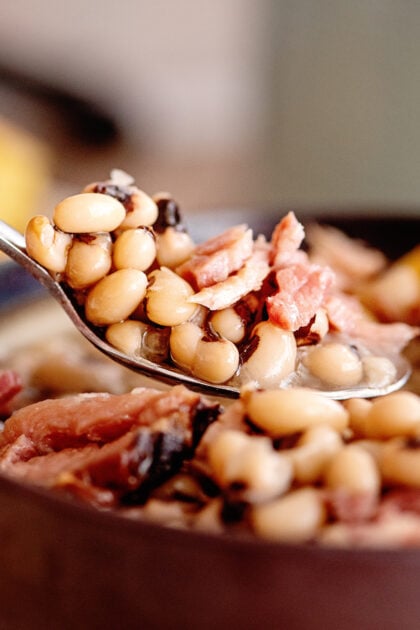
A Quick Look At The Recipe
- Recipe Name: Black Eyed Peas and Ham
- Main Ingredients: dried black eyed peas, pork for seasoning: ham hocks, ham bone, or large piece of ham, salt, pepper, cooking oil, granulated sugar
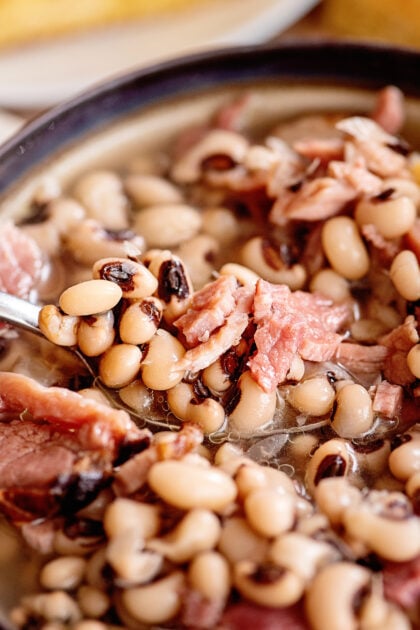
- Why You'll Love It: Black-Eyed Peas and Ham simmer low and slow with smoky seasoning meat, simple spices, and tender peas that cook to buttery perfection. This classic Southern dish is traditionally served on New Year’s Day for good luck and makes a warm, comforting meal any time of year.
This version of black-eyed peas and ham cooks low and slow with tender peas, smoky seasoning meat, and simple pantry spices that work their magic as the hours go by. It’s a cozy, soul-settling dish that tastes like home and keeps everyone coming back for “just a little more,” even after the bowls are already scraped clean.
Want more black-eyed peas recipes to make this New Year’s Day? Check out my Black Eyed Peas & Vegetarian Hoppin John and Crock Pot Black Eyed Peas With Smoked Turkey Leg!
Before You Get Started
- Storing the beans: Store your dried peas in large mason jars rather than the bags they come in. This keeps little critters out of your peas!
- Soak overnight or use the quick-soak method: Dried peas need plenty of time to hydrate so they cook evenly and get that buttery-soft texture. If you’re short on time, use the quick-soak method by boiling the peas for 2 minutes, then letting them sit for 1 hour before cooking.
- Sort the peas: Spread them out and remove any stones or debris before soaking.
- Choose your seasoning meat: Ham hocks, a ham bone, or leftover ham all work beautifully.
- Keep them covered with water: These peas simmer for several hours, so make sure there’s always enough liquid to prevent sticking.
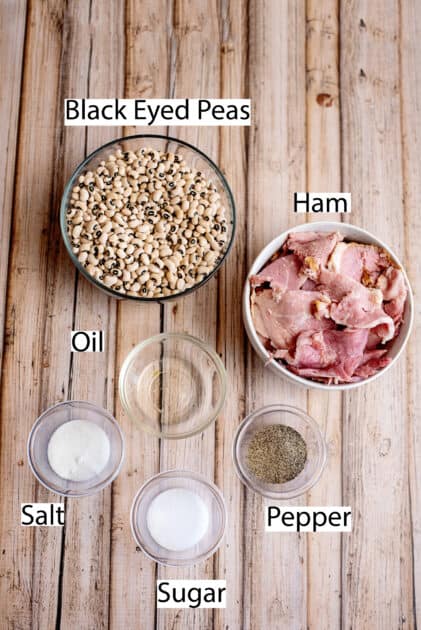
Recipe Ingredients
- Dry black eyed peas
- Pork of your choice (country pieces of ham, ham hock, or a ham bone).
- Salt and black pepper
- Oil
- Granulated sugar
How to Make Black-Eyed Peas and Ham
1. Soak the Peas
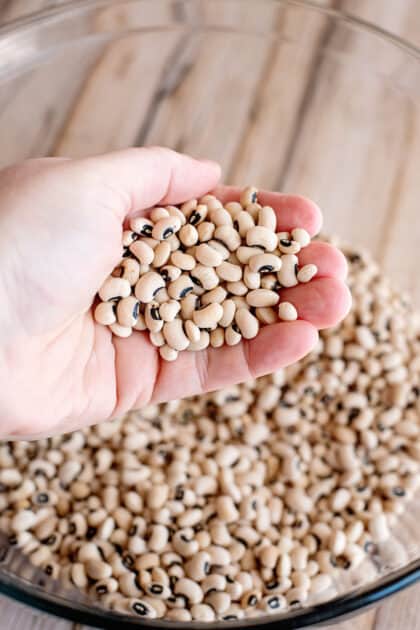
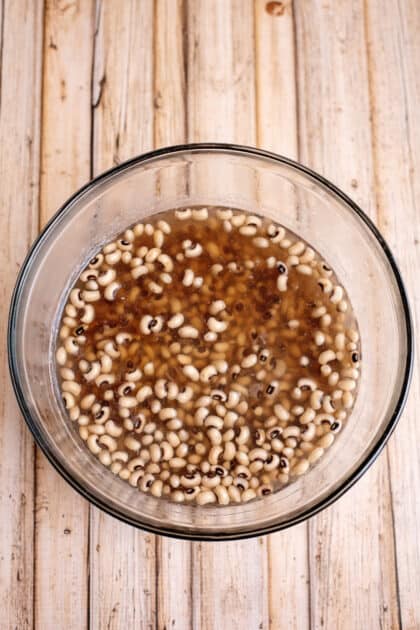
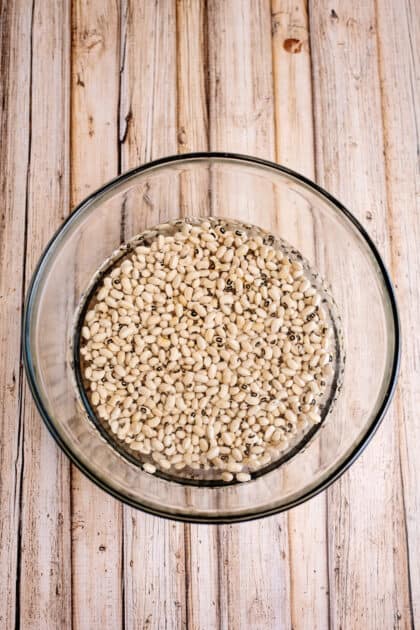
Sort through the dried peas to remove any stones. Place them in a large bowl, cover with water (a few inches above the peas), and soak overnight.
2. Drain and Transfer
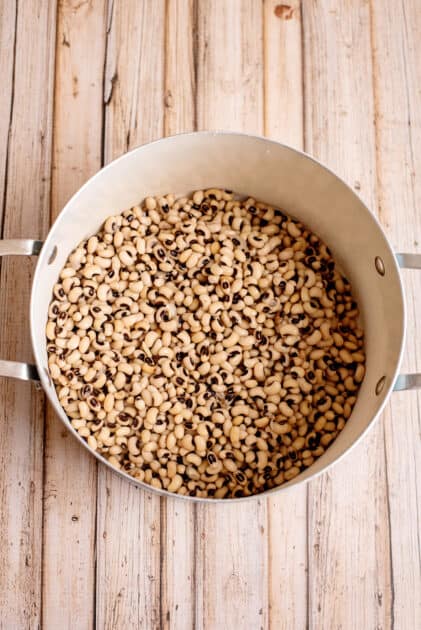
In the morning, pour off the soaking water and place the peas into the pot you’ll be cooking them in.
3. Add the Pork and Seasonings
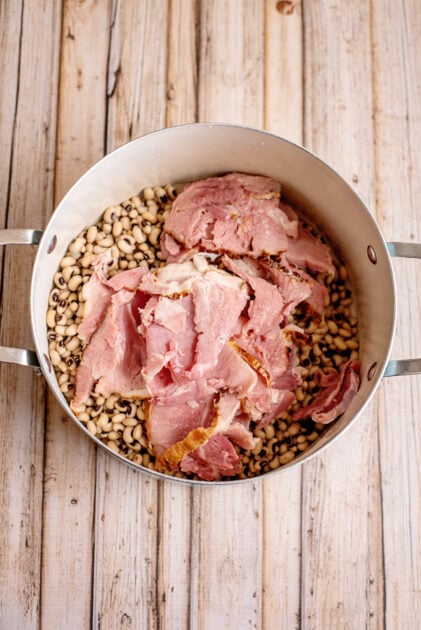
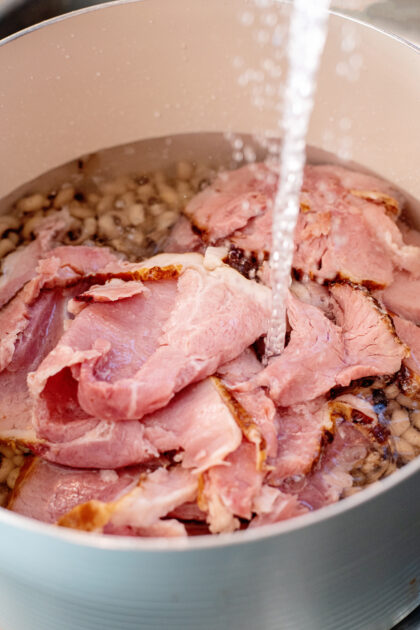
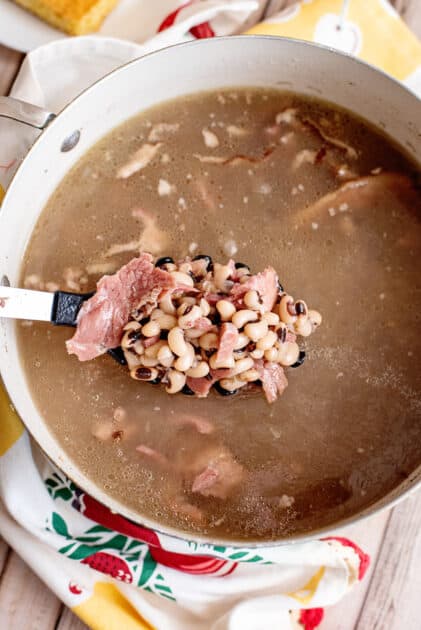
Add your ham hock, ham bone, or ham. Cover with water and add the salt, pepper, oil, and sugar. Bring everything to a boil, then reduce the heat to a gentle simmer.
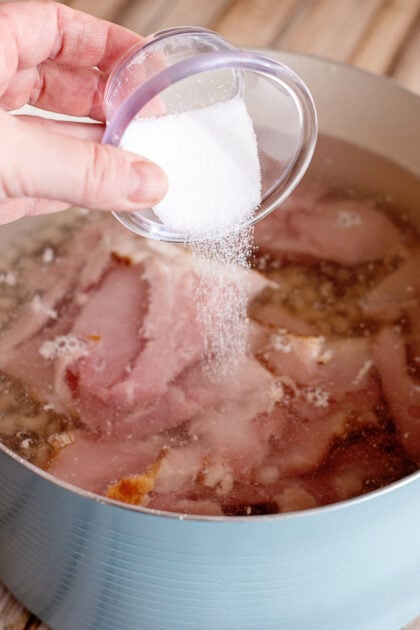
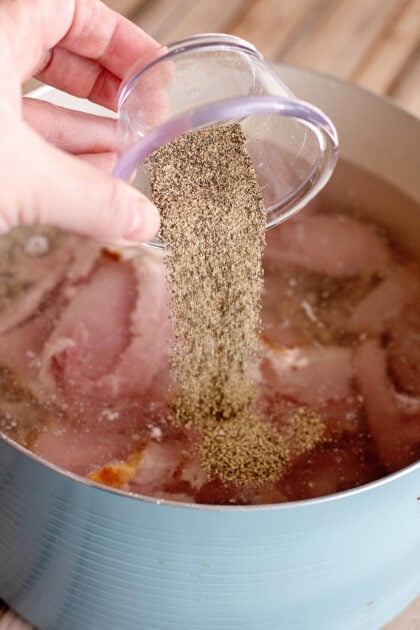
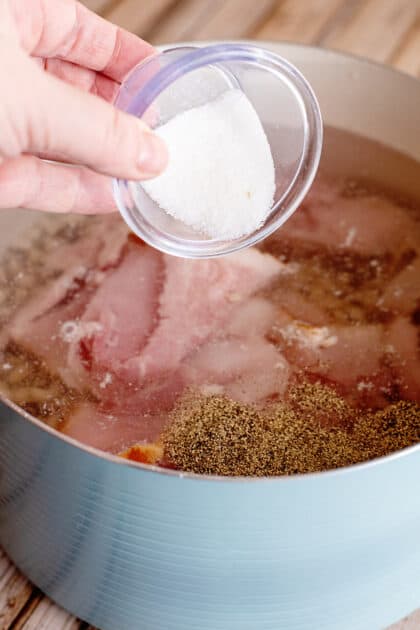
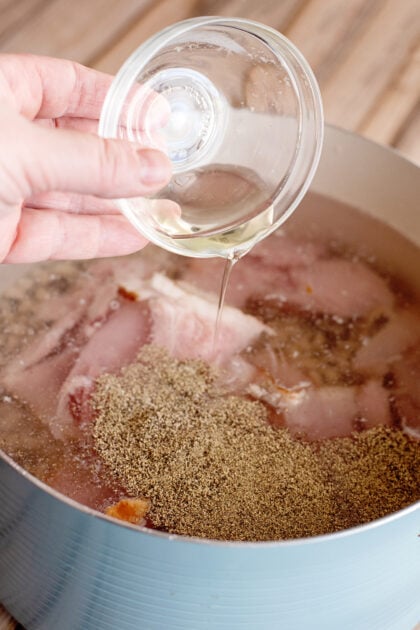
4. Cook Low and Slow
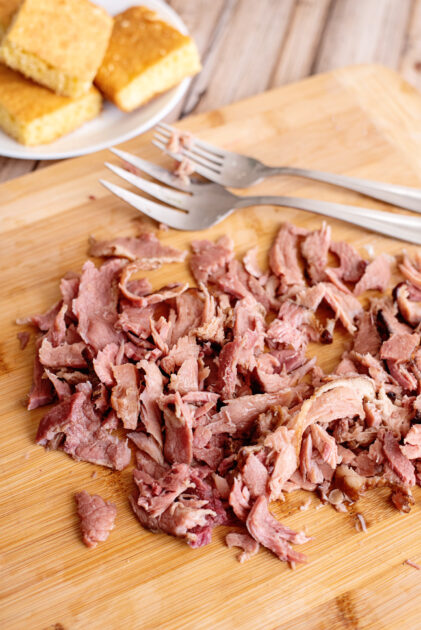
Simmer uncovered for several hours. Remove the ham, shred it, return it to the pot, and continue cooking until the peas are tender. Total cooking time is typically three to four hours.

Storage
- Refrigerator: Store leftovers in an airtight container for up to 4 days.
- Freezer: Freeze cooled peas in a freezer-safe container for up to 3 months. Thaw in the fridge overnight before reheating.
- Reheating: Reheat on the stovetop or microwave.
Variations & Recipe Notes
- Add aromatics: A chopped onion or a couple of garlic cloves can deepen the flavor.
- Spice it up: A pinch of crushed red pepper or cayenne pepper adds gentle heat.
- Make it richer: Swap part of the water for chicken broth.
- Add seasoning: Add a teaspoon of ground cumin or Creole seasoning.
- Vegetarian twist: Use smoked paprika instead of pork and cook with vegetable broth.
- Thicker peas: Mash a small scoop of peas in the pot near the end of cooking.
Recipe FAQs
Why do Southerners eat black-eyed peas on New Year’s Day?
Black-eyed peas are a long-standing Southern tradition believed to bring good luck and prosperity in the new year. Many families pair them with greens and cornbread for even more of those symbolic blessings.
Can I use canned or frozen black-eyed peas instead of dried?
You can, but dried peas develop a deeper, richer flavor during the long simmer. If using canned or frozen, reduce the cooking time and season gently so they don’t become mushy.
Why soak black-eyed peas before cooking?
What other meat works in Hoppin John?
Besides ham, here are some other meat ideas to pair with your black-eyed peas:
- Saute some sliced andouille sausage to make a Cajun-inspired Hoppin John. But really, any sausage works. Add half a teaspoon of Cajun seasoning to make the dish sing!
- Fry up some bacon, chop it up, then stir it in at the end.
- Have leftover baked ham? Warm it up then add it to your Hoppin John.
Can I use other types of beans instead of black-eyed peas?
Yes, you can use pinto beans, black beans, cannellini beans, or great northern beans if you like.
How do you make black eyed peas with ham in the slow cooker?
For crockpot black-eyed peas and ham, just follow the directions, but instead of adding the ingredients and water to a large pot, we’re going to place them all in a slow cooker. Cook on high for 3 hours or on low for 6 hours.
How do you serve black eyed peas and ham?
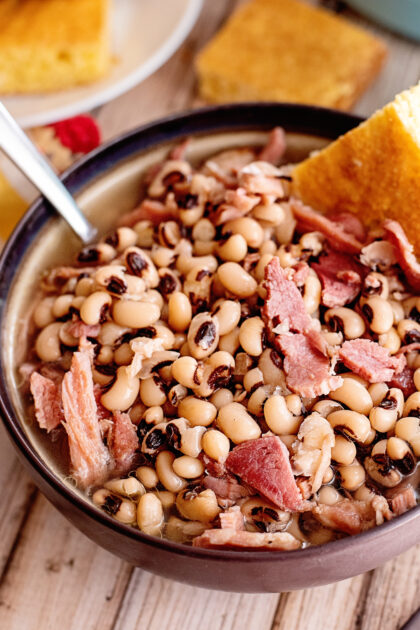
The traditional way to serve this main dish is with a side of hot water cornbread and a mess of collard greens. To make it even more filling, serve it with cauliflower rice, brown rice, or quinoa.

Black Eyed Peas and Ham
Ingredients
- 1 package dried black eyed peas
- pork for seasoning: ham hocks, ham bone, or large piece of ham
- 1 tbsp salt
- 1 tbsp pepper
- 1 tbsp cooking oil
- 1 tbsp granulated sugar
Instructions
- Sort through beans to ensure there aren't any stones. Place sorted beans in a large mixing bowl or pot. Completely cover with water (with a few inches extra over the top) and soak overnight.1 package dried black eyed peas
- In the morning, pour off the soaking water and place the peas in the pot they're to be cooked in.
- Add pork for seasoning. Cover with water to ensure that peas don't boil dry. Add all other seasonings. Bring to a boil and reduce heat. Simmer, uncovered, for several hours.pork for seasoning: ham hocks, ham bone, or large piece of ham, 1 tbsp salt, 1 tbsp pepper, 1 tbsp cooking oil, 1 tbsp granulated sugar
- Remove ham and shred it, then place it back in the pot. Continue cooking until peas are tender. Total cooking time will take at least three to four hours.
One thing I notice about hog jowl is the stores tend to put it out wrapped as one hunk of meat. You have to pick out two or three hunks and ask their butcher slice it like thick bacon. Sometimes you find it by the bacon and sometimes by the ham.
I love hog jowl. It has a thin rind on it that is good for chewing on after you eat the “bacon” part off.
Christy,
I love your website! Your sparkly personality and beautiful spirit shines through your words and recipes. Though you are always politically correct, as a fellow Christian, I know where that sparkle comes from!
With each of your posts, I feel a kinship of sorts! (And, by the way, I, too have a degree in Home Economics, known now as Family and Consumer Sciences.)Though I am Texas born and bred, my family’s traditions and cooking style reflects all of your’s. I come from a large extended family…including beloved grandparents, aunts, uncles, cousins (kissin and other wise,) in laws, out laws, step laws, adopted family laws, and friend laws. Holidays have always been fun, silly, treasured time together. My grandfather was a Baptist minister, so needless to say, no spirits were served on New Year’s Eve at midnight, nor any other time! Traditions came in different ways and from different family members. My Aunt Kate, fun, mischievious, and all around delightful, started our New Year’s Eve midnight tradition. How, and why it came about, who knows. At the stroke of midnight, you MUST, sit on the floor, eat blackeyed peas out of a cup, with a spoon, with a side of cornbread, slathered with butter, and a thick slice of onion. Don’t like those things??? Doesn’t matter! Tradition must be followed even if you have to be held down and forcedly fed, and sometimes, through the giggles, not too gently! Though the grandparents, aunts, uncles, many cousins and extended family members are now long since in heaven, the giggles, stories, and wonderful memories linger and are told over and over as we sit on the floor and eat our blackeyed peas with a spoon, at the stroke of midnight:)
Hi Christy – I’m a lucky girl. For Christmas, I received an autographed copy of your cookbook! Love it, Love it, Love it!
Well, Christy, I’ve got a “lazy girl’s” way to cook my peas. I buy a bag of ’em, sort ’em and dump ’em in the Crockpot! I add water so that it’s twice as high in the pot as the peas. I throw in my smoked hocks, tablespoon of salt, and let it go on low from the night of the 30th. By midnight, New Year’s Eve, they’re ready to eat. Always heard that they were the very first thing you should put in your mouth in the new year. (BTW, that’s one benefit of now living in Michigan – you don’t have to worry about the stores selling out of peas or greens!)
Love your recipes, I grew up in the south but never cared for blackeyed peas. I was so happy when I moved to Ohio and learned that their good luck meal for New Years is pork and saurkraut…yum one of my favorite meals.
I love pork and saurkrout too. Especially country ribs boiled with the saurkrout and a side of mashed potatos.
Christy,
Thanks for all the yummy recipes on your website. My family looks forward to whatever new dish I discover and try next. Just curious, where do you find all these great Pyrex bowls? They remind me of my Mom.
Hey Beth! Thank YOU so much for being here!
I’ve gathered Pyrex throughout the years. Some of it has been passed down by family but most was found at flea markets, ebay, and thrift stores. Flea Markets are my favorite place to hunt!
Gratefully,
Christy
Within your article regarding Southern traditional food, you refer to Vicksburg, Virginia.
Vicksburg is in Mississippi, and home to the Vicksburg National Military Park, and I am certain that you have set some of those poor souls interred there spinning in their resting place.
I do apologize and appreciate the correction! To your great benefit, you likely had wonderful history teachers growing up as I kept all of the worst history teachers busy teaching me and my classmates 🙂 I do hope my correction will allow the poor souls to rest in peace once again.
That brought back memories, my grandpaw always called the juice off of turnip greens pot liquor,and corn was roast nears.Not sure why, may be due to almost all of the time there were no turnip greens left, we all pretty much licked the pot clean.lol. My granny always cooked her vegetables in an cast iron kettle,and the taste was sooo good. And she always had a baked rice pudding to eat. I love your web sight!!!!!!!!!
Corn that was suitable for roasting (full ears with no bad spots) were called Roasting Ears. But with our southern way of shortening words, that becomes roast nears!